Bring Your Own Device Policies


Yesterday I had the opportunity to present a webinar through hr.com entitled "Protecting Your Company from the Departing Employee".  If you would like to actually view the webinar follow this link.

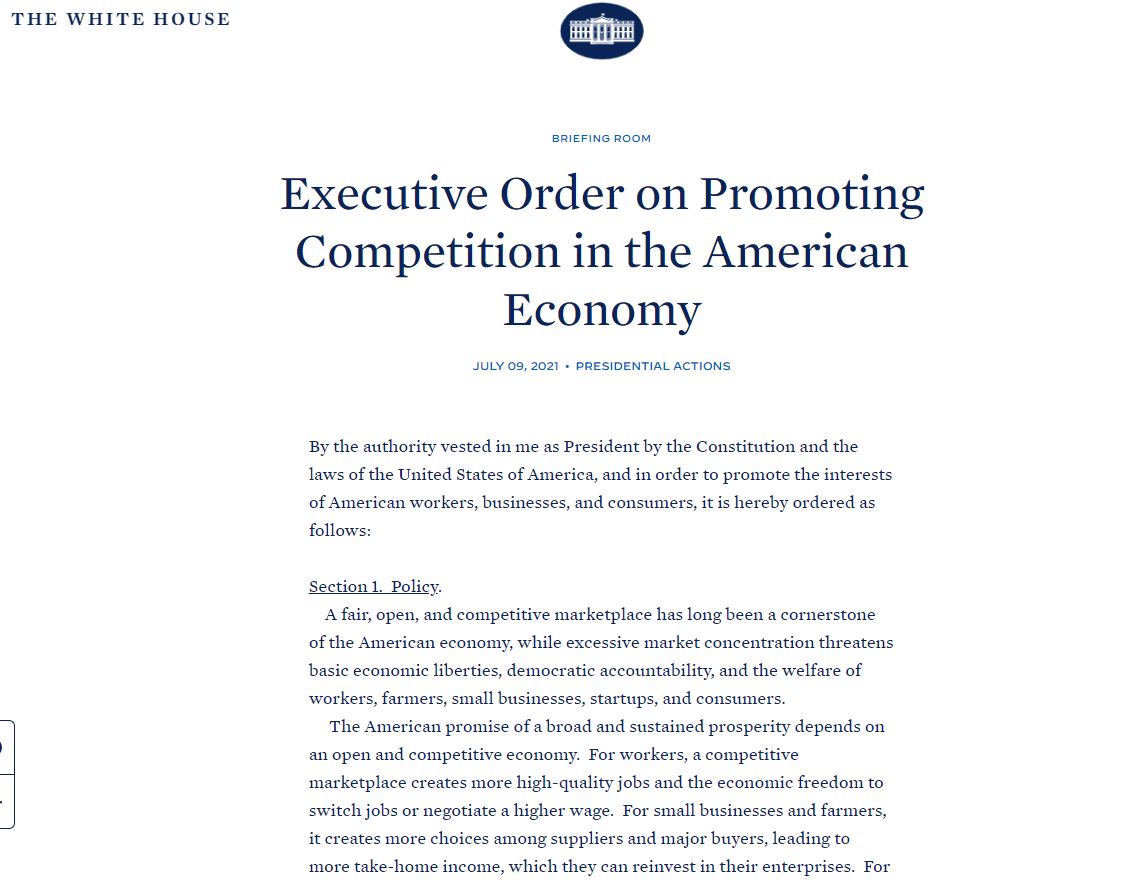
One of the issues that we discussed are employment policies that restrict the use of personal storage devices, like a jump drive, from office use.  The thought in implementing such policies is to restrict the ability to take large amounts of data with them from the office by using these devices.  Ken Vanko wrote on the subject earlier in the year. These types of policies can include smart phones, laptops, and tablets as well.  The White House has provided some examples of these type of policies.  An Internet search will provide you with a number of sample policies and suggestions, but they should be tailored to your business.  Most companies don't have these policies in place but they need them.

Additionally, the webinar included a few movie clips that I have posted below for some HR entertainment:  

Show Me The Money - Injunctions Aren't Cheap


Last week I had the opportunity to speak to the Dallas-Fort Worth Recruiters Network about non-compete agreements. One of the questions that came up was what type of fees should a litigant who is either trying to enforce or defend a non-compete anticipate? Though an exact dollar amount will vary based upon your lawyer's hourly rate, fee agreement, etc., there is one truth. Injunctions are not cheap.

In a typical lawsuit, the plaintiff will draft their pleadings file with the court and serve the defendant with process. There is no rush, generally, and discovery and the motion practice that  follows will be spaced out over time meaning legal fees will be spaced out over time. This allows a client to budget and prepare for those fees. There is usually not the upfront sticker shock which is seen in a non-compete or temporary injunction case.

Why is this? Injunction cases usually starts out with a application for a temporary restraining order followed by the temporary injunction hearing. Preparing an application for temporary restraining order is not like your typical lawsuit. It is much more detailed and requires factual verifications that are provided by the client. This means the lawyer has to secure much of the evidence that is necessary to support the elements for injunctive relief. This could include documents, multiple affidavits, and other items that are not necessary for a standard lawsuit. As a result the upfront cost of preparing the original petition and application for injunctive relief is significant.

After the actual lawsuit and application are prepared, the lawyer will then have to go to the courthouse and attempt to obtain the temporary restraining order from the judge. More often than not,the plaintiff will seek some type of expedited discovery while the  temporary restraining order is in place. This could range from some simple written discovery such as document requests and interrogatories to depositions. In most cases, the defendant will request the same. This can be very expensive. Essentially, the parties are pressing discovery into a one or 2 week period before the temporary injunction occurs.

Finally, there is the actual temporary injunction hearing. It is a min-trial. It requires significant preparation including witness preparation and many of the same things you would see during a trial. In sum, over a few short weeks the parties will have expedited discovery and a trial through the temporary injunction hearing.   As a result, the first bill usually provides a little bit of sticker shock in terms of fees and costs.

The good news is  most of these types of cases, especially non-compete disputes, see a resolution either right after the temporary restraining order or sometime before the temporary injunction. Generally there is some indication from the judge as to what he or she thinks about the plaintiff's case which will push one side or the other toward settlement. Also, the costs involved in the injunction proceeding push the parties toward settlement as well. The good news is there is early resolution of the case, the bad news is there are big costs upfront. This is something to keep in mind when considering an application for an injunction of some sort. The inherent nature of non-compete disputes makes extraordinary relief is necessary in order to protect the business at issue and the cost makes sense. We have previously discussed whether the attorney's fees are recoverable in these types of disputes and the take away from that discussion is there is a big difference from being "entitled" to attorney's fees versus actually obtaining them.
 

May 1 Presentation to DFWTRN


On Wednesday at lunch I will be speaking to the DFW Texas Recruiters Network about legal issues confronting placement professionals.  Please join me if you can.  Here is a link to the details.

Why Abuse of Discretion Matters to Employers (Non-Compete)


Talking about the standard an appellate court uses to review a temporary injunction in a non-compete case isn't very exciting and we can get lost in the legalese. But it is critical to have some appreciation of what wide discretion a trial court has in Texas in addressing enforcement of a non-compete by virtue of the abuse of discretion standard.

Let's assume your lawyer has obtained a temporary injunction restricting a former employee from competing or soliciting customers for a period of one year. The former employee appeals the ruling of the trial judge to court of appeals on an expedited basis. After all the briefs have been filed the appellate court then considers the injunction.

Under Texas law that review is limited to two issues - (1) did the trial court abuse its discretion in finding the employer showed a probable right of recovery; and (2) did the trial judge abuse its discretion in finding the employer showed immediate irreparable harm? That's it. The law instructs the appellate court that it must affirm the trial court's ruling if there is evidence to support its finding - it cannot substitute its judgment for the trial court even if it would make a different decision. The rationale behind this is an appellate court is not on the scene. It is not in a position to weigh the credibility of the witnesses or consider the facts of the case as a whole on an expedited basis - that is the role of the trial judge.

Whether the trial court granted or denied the temporary injunction it is very difficult to reverse its ruling. This is another reason why most non-compete disputes are resolved early on - even before the temporary injunction hearing. Once the trial court grants the temporary restraining order it is an uphill battle of the party on the other side of the ruling. What's the takeaway for employers? The reality is the trial court judge's ruling will be upheld and the proceedings in the trial court, not the appellate court will most likely resolve the dispute.
 

Why Courts Like Non-Solicits over Non-Competes


One of my favorite new things to listen to is the Fairly Competing podcast put on by Ken Vanko, Russell Beck, and John Marsh. The podcast addresses a number of issues related to non-competes and trade secrets and recently discussed a court's preference to enforce a non-solicit over a non-compete. The basic premise is that courts and for that matter juries are more likely to enforce a non-solicit because it prevents the former employee from targeting customers as opposed to putting the employee out of work.

Under Texas law there is no real legal distinction in terms of enforceability. Both a non-compete an non-solicit must satisfy the Texas non-compete statute meaning the agreement has to be reasonable and ancillary to an otherwise enforceable agreement, among other things. That said, there is a real psychological value to being able to tell the judge that you want the former employee to stay away from company customers as opposed to putting he or she out of work.

It is always a very effective argument for the employee to say that they are just trying to make a living and depending upon their circumstances may have been in the same line of work for many years with multiple employers. Of course these are not always the facts and there are many instances where a non-compete makes sense.

Arguing simply for a non-solicit removes the “out of work" defense and restricts the covenant to keeping the former employee from taking current customers. Just from a psychological perspective, courts are more likely to embrace these because they seem fair and equitable.  Most folks can identify with wanting to restrict access to company customers after the employee leaves the company.

One of the recommendations made in the podcast is to seek injunctive relief based both on the non-compete and non-solicit. If the lawyer is unsuccessful with the non-compete arguments he or she can fall back to the non-solicit agreement.

As with any case, your mileage will vary based upon the facts and circumstances. If there is a blatant violation of both agreements the court should enforce both, but this is not always the case. Employers should consider using both types of post-employment covenants but seriously consider whether they ask the judge to enforce both.  A judge considering a temporary restraining order or injunction has wide latitude and the employer who appears to be fair and not overreaching has a better chance of success.  
 

Does your lawyer have to disclose your non-compete?


There is an interesting case that recently came out of the Dallas Court of Appeals regarding an attorney's obligation to disclose the existence of a non-compete when he was preparing an independent contract agreement. If you would like to read the full opinion take a look here.

Timothy Brown was a former golf professional who specialized in managing charity golf tournaments. Brown left an employer for Miracle Golf and engaged an attorney to help him with his independent contractor agreement. Brown never disclosed to Miracle Golf  the existence of his non-compete. As soon as Miracle Golf found out about the non-compete it terminated its agreement with Brown and sued Brown and his lawyer.  The facts didn't support a claim against the lawyer, because Miracle Golf was already working with Brown well before the formal agreement was signed.  There was no reliance, which you have to have for a fraud claim.

The case raises the issue of whether a lawyer has to disclose the existence of a non-compete to the other side when negotiating an agreement? There are all sorts of ethical issues that this raises including the attorney-client privilege and the duties that a lawyer owes to his or her client.  There is no one size fits all answer to this question.

As a matter of course, it makes sense for an employee to disclose the existence of such an agreement for a number of reasons including:

  1. Potential employees should be honest with their potential employer;
  2. An employer who finds out that an employee has a non-compete and lied about it could very well fire the employee;
  3. The new employer may have their own legal counsel evaluate the agreement; and
  4. The new employer may still be willing to hire the employee and defend them if a dispute arises.

Bottom line - be up front with your new employer about the agreement.  Only bad things can happen if you don't.  Employers - make sure your new hire checklist includes a question about post-employment covenants.  You do not want to hire a lawsuit.


The Non-Compete Is An Employment Prenup


I really liked Steve Boese’s article on non-competes in the fistful of talent recruiting blog.  Steve considers the non-compete as HR's equivalent to a prenuptial agreement.  Steve also hit on what is most effective about a non-compete whether it is enforceable or not:

Just the threat of potential legal action and the leverage a non-compete appears to give the employer often causes employees to think twice about jumping ship to one of their organizations competitors - or at least for making the jump in one step.

The most critical time period for a non-compete, like a prenup, is when the employee is considering whether to sign it or not.  Yes, there may be attack on it enforceability on down the line but the employer like the spouse has an agreement that employee signed an agreed to follow.  I can not overstate how important this concept is in non-compete litigation.  The employee always had the right not to sign though in most cases this means they won't get the job or could be fired for not signing it in certain circumstances.

Judges and juries deal with cases all the time where one party or another is not complying with an an agreement they signed.   Almost everyone can identify with this circumstance, whether it was a bad paint job, a lemon for an automobile, or the DVD player that didn't work.  Judges and juries like to make people and companies comply with the agreements they signed.  The same holds true for the non-compete or other post-employment covenant.  The most critical point in non-compete litigation is when the employee signed it.  That cannot be undone.


Don't ask job candidates if they have a girlfriend - The NFL Lesson


Regardless of your views on professional sports there is no doubt that the NFL and its teams invest a significant amount of money in 20-somethings who are drafted each year out of college. As part of that process, the teams put each potential player through a number of physical tests during the NFL combine that takes place each year in Indianapolis, Indiana. In addition to physical tests, each player is interviewed and subjected to a number of questions. Much like a typical job interview.


So comes the case of Manti Te’o. Manti unfortunately had a fake girlfriend who died during Notre Dame's run to the national championship game this past fall. It turned out that the dead girlfriend was in fact a man. Of course, the rumors swirled about the sexuality of Manti, though he denied that he was gay.


It has been reported that Manti and other draftees were asked whether or not they liked girls, had a girlfriend, or were in a relationship during combine interviews.  The intent of the questions was to determine if the candidate was gay.   Marriage status, sexuality, and religion are on the top of the list of questions not to ask during any interview. 


The New York attorney general is now investigating whether this occurred. According to the NFL, it is league policy to neither consider nor inquire about sexual orientation in the hiring process. Employers, don’t ask about sexuality it has no bearing on employment and will subject the employer to all sorts of problems.


The non-compete agreement that didn't happen.


Recently, the Swiss drug maker Novartis announced a $70,000,000 severance package, which included a non-compete, for its departing CEO Daniel Vasella.  In exchange for the package Vasella was going to sit on the sidelines and not share any of his knowledge about the industry with competitors.  

Novartis shareholders and politicians expressed outrage over the terms of the deal and Novartis scrapped it. Outrage over executive compensation was at an all-time high during the great recession,but public and shareholders are certainly still very sensitive to these types of issues. This type of an agreement is an outlier in terms of its scope and money involved but there are certain situations where they make sense.  This is especially true in the case of the purchase of a business.

A Texas company still needs to ensure that the agreement satisfies the Texas Non-Compete Statute.  It is questionable whether the Novartis deal would have been enforceable in Texas.  In many instances the employer will simply keep the x-executive employed and pay her out over time - this can be easier to enforce and administer.  No word on what Vasella stands to receive now. Interestingly enough, Swiss voters adopted a measure that will require shareholders to approve executive pay.  Can't imagine seeing that in the US.

Can the Public Interest Trump a Non-Compete? Yes.


Recently, the Tyler Court of Appeals invalidated a non-compete agreement among cardiologists in Nacogdoches, Texas. A breakdown of the opinion can be found here by Jonathan Pollard in his non-compete blog.  His sum up of the ruling:

In what may stand as an opinion for the ages, the Texas Court of Appeals affirmed the trial court’s ruling, holding that the non-compete agreement was over broad, contrary to the public interest and therefore unenforceable. First, the agreement prohibited [one doctor] from practicing medicine of any sort – not just cardiology – within ten miles of the city limit. The appellate court found that such a restriction was over broad in scope and was greater than necessary to protect NHC’s legitimate interests. Second, and more significantly, the court held that the public interest in physician choice and access to medical care trumped the freedom of contract.

Physician related non-compete agreements are legal in the State of Texas assuming they satisfy the Texas non-compete statute which includes a buyout provision. Here, the court focused on the ramifications of enforcing such a non-compete agreement on the Nacogdoches community. As it is a smaller area, there are a lot less cardiologists and the court determined that public health considerations outweighed enforcing the non-compete.

This is particularly troubling if you have complied with the statute and then a court comes in and invalidates the agreement for essentially a public interest exception.  Should Courts consider whether the public has easy access to a cosmetic surgeon or cosmetic dentist?  What about non-health related services?  The exception could go a long way.  

That said, I doubt Texas courts would go that far. Deciding not to enforce a cardiologist's agreement in a small town is quite different than a cosmetic surgeon's agreement.  Employers entering into non-compete agreements might also consider these types of issues and whether the enforcement of the non-compete agreement would have some adverse effect upon the public at large. Clearly the medical realm is an easy example of this though there might be others.
 

Non-Competes - Can I get my attorneys' fees?


A few weeks ago, we discussed realities of recovery of attorney’s fees in litigation. This post attempts to narrow that focus on post employment covenants.  Under Texas Law, a party can recover its reasonable and necessary attorney’s fees for a breach of contract under Texas Civil Practice and Remedies section 38.001. A non-compete agreement or non-solicitation agreement is a contract. So, prevailing wisdom is that like any other contract, an employer seeking to enforce post employment covenant can recovery its attorney’s fees, especially when the contract calls for fees.

There is however a line of cases emerging from some courts of appeals that says otherwise. The rationale behind these cases is that since the legislature did not provide for recovery of attorney’s fees in the non-competes statute, they are not recoverable.

The courts of appeals are not in unison and the Texas Supreme Court has not addressed the issue.   So, what to do?  Make sure to specify for the recovery of attorneys' fees in non-compete/employment agreements. Eventually the Texas Supreme Court will address the issue. Be prepared to confront this argument from both employers and employees.
 

Tips for Placement Professionals


Today I have the privilege of speaking to the DFW Texas Recruiters Network. Over the years I have had the privilege of representing placement professionals in a number of circumstances.  Some tips:

  1. Make sure your engagement agreements/contracts make sense and are enforceable;
  2. Remember that non-competes and non-solicitation agreements in Texas can be enforceable;
  3. Screen your candidates to determine if they have entered into a non-compete or non-solicit;
  4. Remember that if someone you placed is sued it is likely that their new employer will be as well;
  5. Protect your candidate and client information - that information can be a trade secret;
  6. Make sure you are in compliance with the Texas Occupations Code;
  7. A little money spent on an attorney up front can save a lot of money down the road;
  8. Be factual when you talk about a potential employer;
  9. Don't give legal advice; and
  10. If you sign an agreement prepare to have to comply with it.

Below are some resources and previous writings placement professionals might find of use:


Marathons and non-competes - really.

                                     Photo from the 1900 Paris Olympic Marathon 

I have lived in Dallas for quite some time, and had the opportunity to run the Dallas White Rock Marathon now known as the Dallas Marathon. The Dallas Marathon usually takes place in early December and is sufficiently spaced out from the other Texas marathons to prevent any conflicts or a situation where one marathon would draw runners from another. Generally the other "big city" marathons in Texas are Houston, San Antonio, and Austin. (No offense to the Cowtown Marathon in Fort Worth which I will be doing later in the month.)

This past week, the San Antonio Rock 'n' Roll Marathon announced that it was going to take place on December 8, the same date as the Dallas Marathon. A few folks in Dallas got upset over this and it turned out that there was actually a contract provision between the 2 marathons that prevented such a conflict. The provision provides that the San Antonio marathon:

shall refrain from sponsoring, producing, organizing, promoting, managing or conducting any marathons, half marathons, relays or other running events or events with a running component in the State of Texas from December 1 through May 31 each year for the life of our agreement…

Even though Dallas and San Antonio are 275 miles apart, marathon organizers were concerned runners would go to San Antonio instead of Dallas. One report estimated Dallas would lose 700 runners.

Things were ironed out and later last week it was announced the San Antonio marathon has moved its date from December 8 to November 17, 2013.

Lance Armstrong - You Can't Fake Sincerity


Though this is slightly off topic, the Lance Armstrong imbroglio certainly provides some lessons for what constitutes an effective apology but more importantly what makes an effective witness during a trial or arbitration. I’ve written previously  about Lance’s legal and financial woes all of which culminated in his interview with Oprah Winfrey last week. While the motivations for that interview are unclear and there are numerous theories for why he "came clean" the interview was ultimately ineffective in starting the road back to redemption because he did not come across as sincere - you can't fake sincerity.  

Witness preparation can be a hit or miss process. There are some folks who are just naturally good witnesses. They answer questions effectively and plainly. Most importantly they come across as sincere. In high-stakes litigation significant amounts of money are put towards preparing those witnesses to testify whether it’s through a jury consultant, lawyers, or even public relations experts.

Lance Armstrong has assembled a public relations and legal dream team. Don't think for a minute that almost all the questions that Oprah asked weren’t considered by his team and answers rehearsed. Practice doesn't always make perfect.

Sincerity cannot be coached. True remorse cannot be coached. Though there were instances within the interview where Lance appeared somewhat emotional (specifically when he told his son not to defend him anymore) the vast majority of his answers seemed like they were being made simply because he got caught. Most people can forgive doping. Especially when it is in a sport that has been under the doping microscope such as cycling. Armstrong's battle is with the fact that not only did he dope and lie, he went on the offensive and ruined people's lives. 

The public, just like juries, are very good at smoking out insincere or bogus explanations. Ultimately only time will tell what the public makes of Lance’s mea culpa . No matter how much coaching there is or time invested in preparation, if there is no sincerity or remorse behind the apology or testimony, it will be evident. Many have described Lance’s discussion as a first step. It remains to be seen what the second step will be and whether he is actually capable of articulating an explanation and apology that people can identify with.


We get our attorneys' fees? Right?


Parties to lawsuits sometimes try to seek solace in the fact that the ongoing attorneys’ fees they are paying will be recoverable at the end of their case. The reality of the situation is that just because an attorneys’ fees claim is proper does not mean those fees will ultimately be recoverable. In most cases, whether the case is resolved by settlement (as most are) or by a judge or jury, the successful party is not going to recover all of their attorneys’ fees. The reason for this is because judges and juries have wide discretion in awarding fees and settlements don't usually result in recovery of all fees.

The "American rule" for attorney's fees is basically that each party is responsible for the fees that they incur as part of any lawsuit. State legislatures and Congress created exceptions to this doctrine and have created claims or laws that permit recovery. In Texas, the successful party to a breach of contract claim can recover their attorneys’ fees under Texas Civil Practice and Remedies Code Section 38.001. These are also recoverable under other statutes like the Texas Deceptive Trade Practices Act.

So how are fees awarded? As any other damages would be awarded. If it is a bench trial or summary of judgment, the judge will be called upon to make an award of attorneys’ fees. While int the context of a jury trial, the jury will actually consider the testimony of an attorney, and then write down on the jury charge what they believed reasonable and necessary attorneys’ fees are. Many times juries have a hard time awarding a party attorneys’ fees. Usually this is because attorneys’ fees are disproportionate to the controversy for relative merits of each party to the controversy. So, if the jury thinks that a party should win but it is a close call, they can potentially hedge on attorneys’ fees and award less than what is being sought. The same calculation could be made by a judge as well.

Courts can consider a number of factors:


  1. The time and labor required, the novelty and difficulty of the question involved, and the skill requisite to perform the legal service properly;
  2. The likelihood, if apparent to the client, that the acceptance of the particular employment will preclude other employment by the lawyer;
  3.  The fee customarily charged in the locality for similar legal services;
  4. The amount involved and the results obtained;
  5. The time limitations imposed by the client or by the circumstances;
  6. The nature and length of the professional relationship with the client; 
  7. The experience, reputation, and ability of the lawyer or lawyers performing the services; and
  8. Whether the fee is fixed or contingent.

 So what can a party do to ensure that they recover their fees? Other than trying to make sure that their lawyers bill is reasonable, not much. High-stakes litigation or litigation where injunctive relief is involved means high fees. Ultimately, each party evaluating the relative merits of the case has to understand that they may not be able to recover those fees that they are incurring. Recovery of 100% of fees like any other damage, is not likely and must be appropriately evaluated.